18 Best Places to Visit in Italy (From Someone Who Actually Lives There)

The best places to visit in Italy are a question I get asked constantly — and honestly, it’s the one I love answering most. Because Italy doesn’t give up its secrets easily. You can visit Rome, tick the Colosseum, eat a marginally overpriced cacio e pepe near the Pantheon, and come home thinking you’ve done Italy. You haven’t. Not even close.
Having lived here for years, I’ve slowly worked through the country’s 20 regions, its lakes, its volcanic islands, its trullo farmhouses and its baroque cities that nobody outside Italy seems to talk about. Some of what I found confirmed every cliché. A lot of it genuinely surprised me. This list covers both.
|
Before you read on
• This covers all 18 places in order of personal experience, not a ranking |
The Best Places to Visit in Italy: All 18, Honestly Reviewed
Liguria, Northwest Italy
01 — Cinque Terre
Colorful · Cliff-hugging · Romantic — National Park: ~40 km²
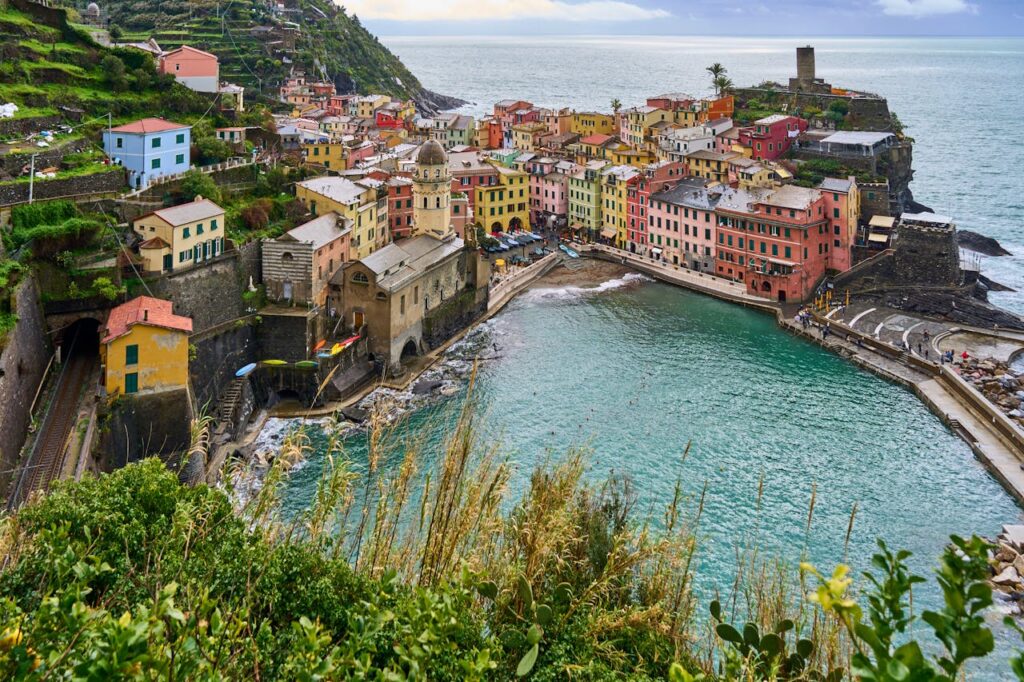
I’ll admit it: I was slightly skeptical before I went. Cinque Terre is so heavily photographed that you half-expect a disappointment. Instead, I walked into something genuinely dreamlike — five medieval villages in pastel shades, stacked improbably above the Mediterranean, connected by footpaths that wind through terraced vineyards and dizzy clifftops.
I caught the train from Genoa to La Spezia and spent three slow days bouncing between the villages on foot and by local train. Sandy Monterosso for beach time. Hilltop Corniglia for the views (and the workout — it sits 100 meters above the sea on a rocky promontory). Sunset-lit Manarola for the photos. Vernazza for a cold Ligurian white by the harbour wall.
Go in May or October. July–August the footpaths are genuinely congested, and the magic gets squeezed out by the crowds.
Lombardy, Northern Italy
02 — Lake Como
Elegant · Lakefront · Glamorous — ~146 km²
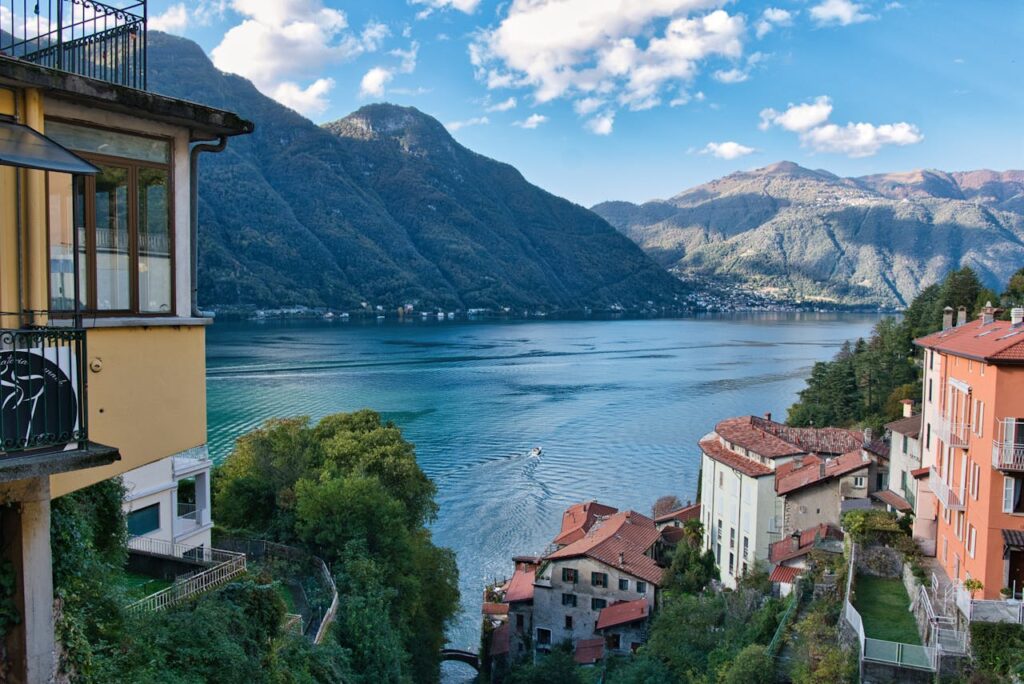
Lake Como is exactly as glamorous as it looks in every film set there — and somehow that doesn’t make it disappointing. It’s glacial water in a shade of deep azure that doesn’t seem real, surrounded by Alps and dotted with villages that look assembled by someone with very refined taste.
An hour’s drive from Milan, I had five days of speedboat rides, immaculate villa gardens, and boutique-lined streets in Bellagio and Varenna. Dinner at Osteria il Governo — giant tortelloni in a citrusy dashi broth, eaten by candlelight — was one of those meals I kept thinking about for weeks afterward.
Tuscany, Central Italy
03 — The Tuscan Countryside
Rolling · Sun-drenched · Timelessly Romantic — ~23,000 km²
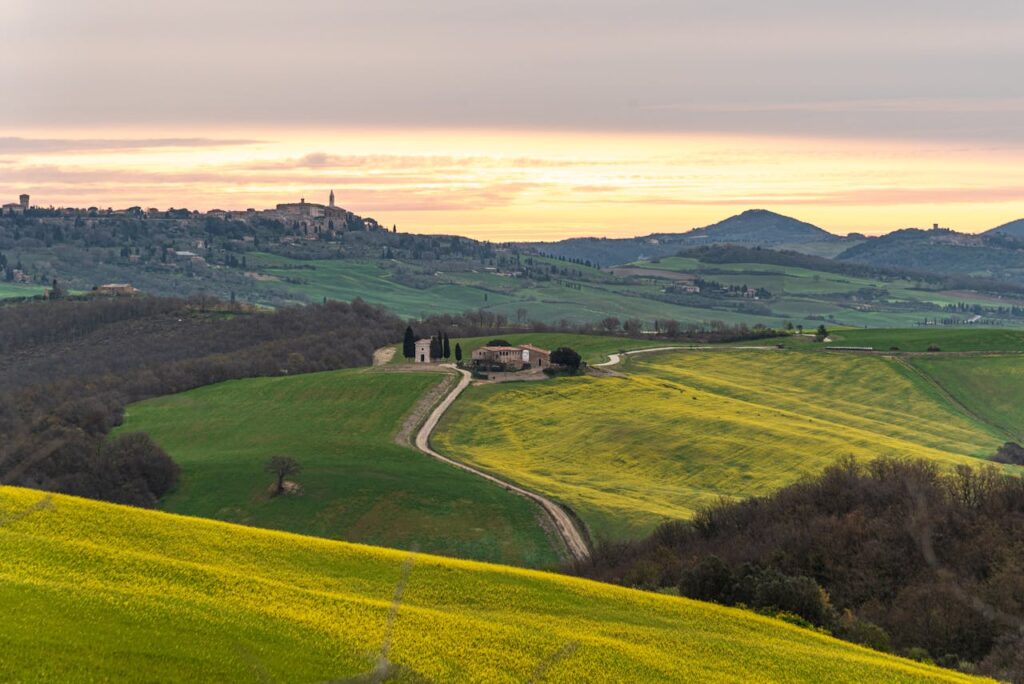
I genuinely don’t think anywhere on earth rivals the Tuscan countryside. Rolling green hills, cypress-lined lanes, sunflower fields the colour of egg yolk, and the occasional wild boar ambling through a vineyard in honey-soft afternoon light. It felt almost unreal. Like someone had turned the saturation up on Central Italy and forgotten to turn it back down.
A car is non-negotiable here. I flew into Florence, drove an unhurried week through the Val d’Orcia, drank ruby Chianti in the vineyards, explored hilltop San Gimignano, soaked in the surreal thermal baths at Saturnia, and ate pici pasta at rustic agriturismos with no pretension and extraordinary food.
Conseil : Montepulciano for views over the Val d’Orcia. Pienza for the pecorino. Neither place needs a reservation in shoulder season.
Liguria, Northwest Italy
04 — Camogli
Colorful · Laid-back · Quietly Romantic — Pop. ~5,000
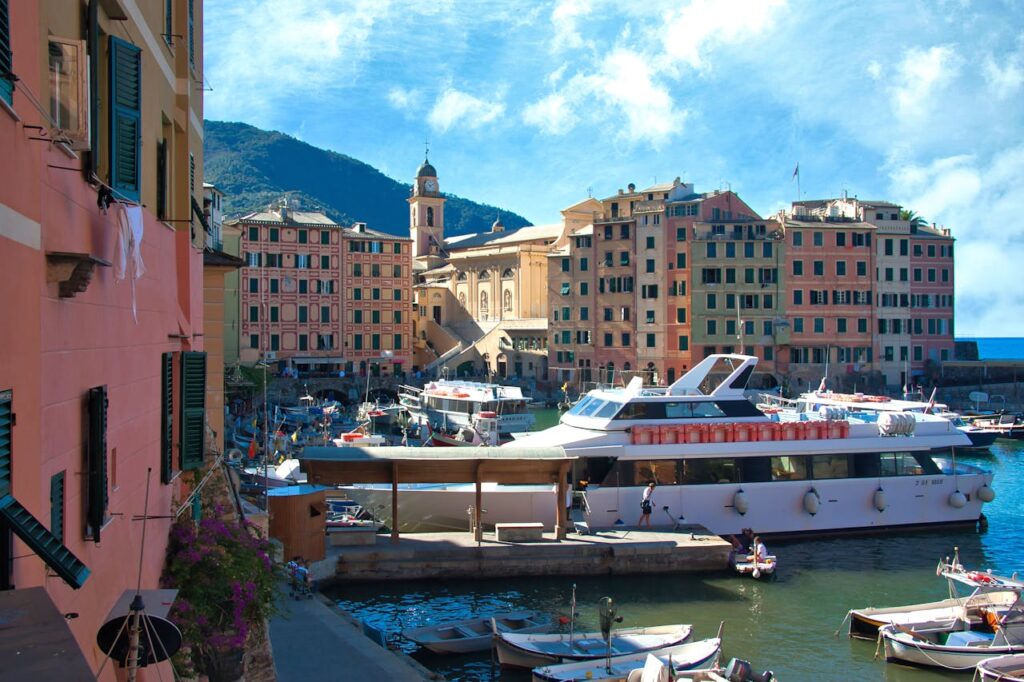
This is the one most people skip, and I understand why — Portofino gets all the press in this corner of Liguria. But Camogli is better. Candy-coloured houses piling down to the sea, a sparkling blue bay, dramatic cliffs, and a fishing-village energy that hasn’t been polished out of existence by tourism.
Thirty minutes by train from Genoa. I wandered the seafront promenade, sat inside the beautiful Basilica of Santa Maria Assunta, and had dinner at the waterfront Ostaia da ö Sigu — flaky artichoke torta di verdura and silky pansotti con salsa di noci as the sea breeze came in off the water.
Northern Italy — Lombardy, Veneto & Trentino
05 — Lake Garda
Tranquil · Dreamy · Family-friendly — ~370 km²
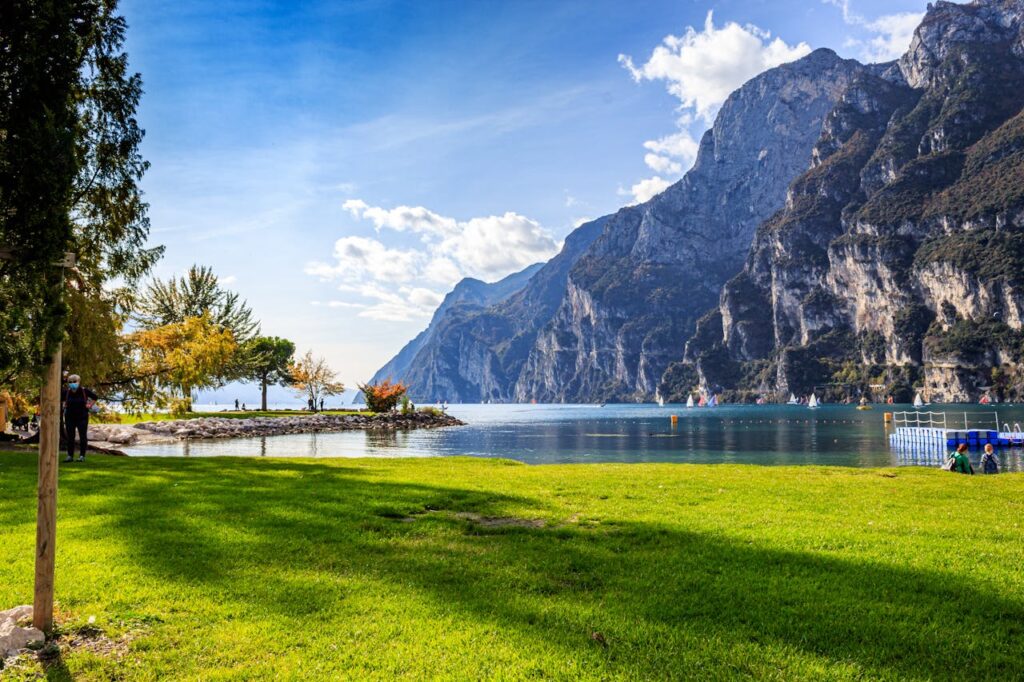
The sheer size of Lake Garda catches you off guard. It’s not a lake so much as an inland sea, rimmed by the Alps, scattered with vineyards, olive groves, ancient castles, and pastel lakeside towns with cobblestone streets and flower-filled balconies. Summer brings crowds — genuinely busy ones — but the wave-lapped serenity manages to persist somehow.
I flew into Verona (45-minute drive) and spent a photogenic week between Sirmione’s storybook thermal baths, boat cruises to Riva del Garda and Malcesine, and the fairytale Scaliger Castle rising straight from the water. Worth every minute of the drive.
Campania, Southern Italy
06 — The Amalfi Coast
Dramatic · Cliff-hugging · Irresistibly Glamorous — ~50 km of coastline
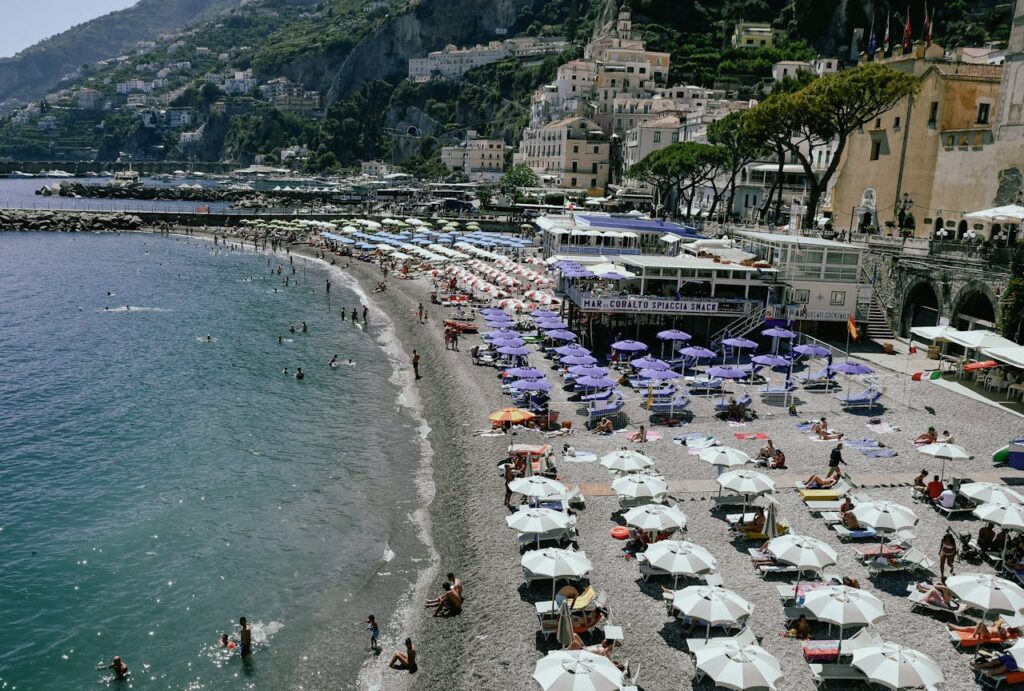
Almost impossibly picturesque. Pastel villages and grand historic villas cling to cliffs above a turquoise Mediterranean, intimate pebble beaches appear around every bend, and the driving — narrow roads with sheer drops and tour buses squeezing past in both directions — keeps you fully alert.
I flew into Naples, hired a mint-green Fiat 500, and spent two weeks wandering Positano’s cliffside lanes, admiring Ravello’s gardens, drinking limoncello in Sorrento, and watching the sun set over the Bay of Naples with a cold glass of local Fiano di Avellino. Among the most romantic trips I’ve ever taken.
Southern Italy — The Toe of the Boot
07 — Calabria
Wild · Sun-soaked · Refreshingly Untouristed — ~15,080 km²
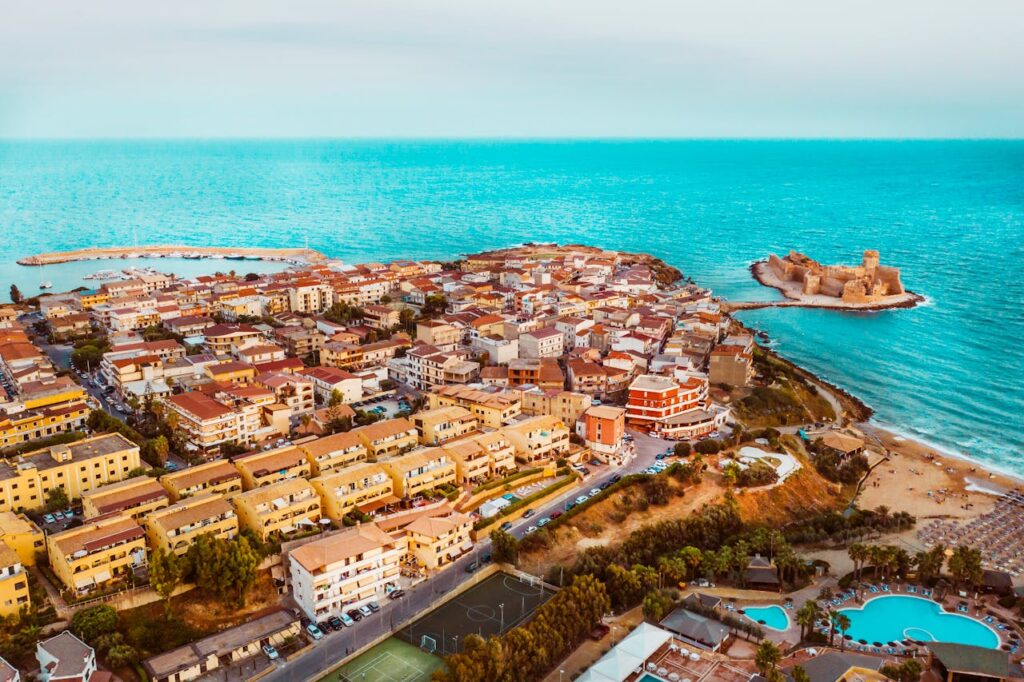
Calabria was the surprise of the whole list for me. Most people drive straight past it on the way to Sicily, and that is their loss. Wild turquoise seas, white-sand beaches, jagged cliffs, hilltop villages with stone houses and Byzantine churches — all wrapped in a quiet, old-Italy atmosphere that hasn’t been packaged for mass tourism.
A week based at a resort near Tropea: dazzling beach, the famous ancient Bronzi di Riace statues in Reggio Calabria, the dramatic island fortress of Le Castella, and local cuisine — melanzane ripiene, sweet cipolla rossa di Tropea, fragrant peperonata — that felt completely distinct from anything I’d eaten further north.
Southern Italy — The Heel of the Boot
08 — Puglia
Sun-bleached · Olive-grove-lined · Beautifully Slow — ~19,540 km²
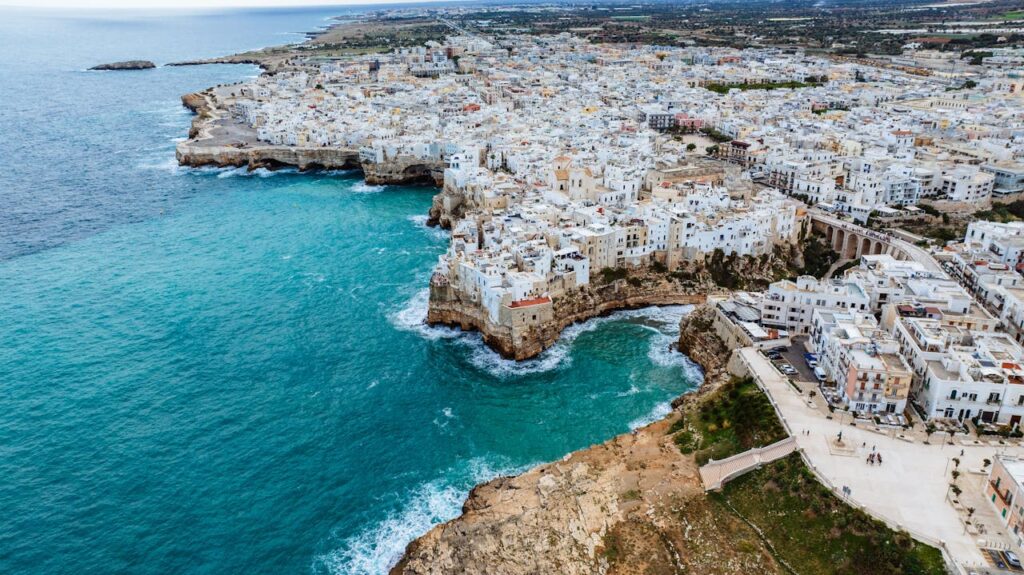
Raw and authentic in a way that few places in Italy still manage. Puglia is a patchwork of white hilltop towns, ancient olive groves, and a turquoise coastline that feels remote despite being increasingly well-known. Ten slow days: dreamy beaches at Pescoluse and Torre Lapillo, Alberobello’s fairytale trulli (those conical stone buildings that look like they belong in a children’s book), and Lecce’s extraordinary baroque architecture — genuinely the Florence of the South, and nowhere near as crowded.
Liguria, Northwest Italy
09 — Portofino
Polished · Postcard-perfect · Quietly Luxurious — Pop. ~400
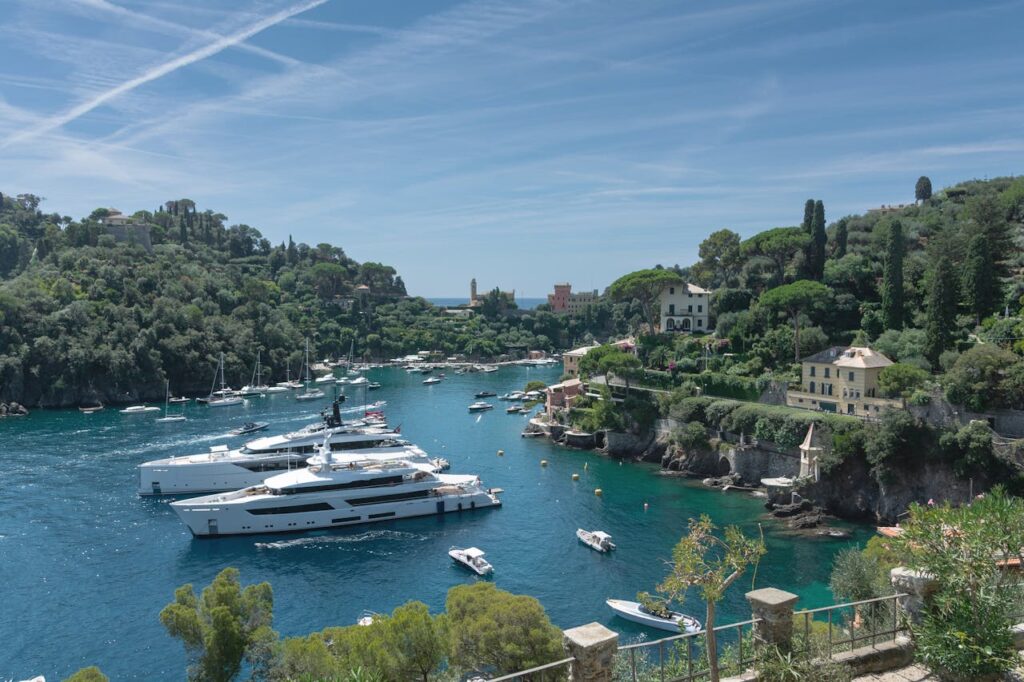
Impossibly pretty, serenely glamorous, and carrying that 1950s celebrity-heyday energy still — pastel façades around a jewel-like harbour, verdant hills behind, yachts swaying gently on water so clear you can see the bottom. I took the train to Santa Margherita Ligure and the 15-minute ferry across.
A long weekend: Paraggi Beach (one of the most beautiful small beaches in Liguria), pine-scented hiking trails through Portofino Regional Park, and candlelit trofie al pesto genovese eaten as the harbour lights came on. The marina boutiques are worth a wander even if you’re not buying.
Bay of Naples, Southern Italy
10 — Capri
Glamorous · Sun-drenched · Effortlessly Chic — ~10.4 km²
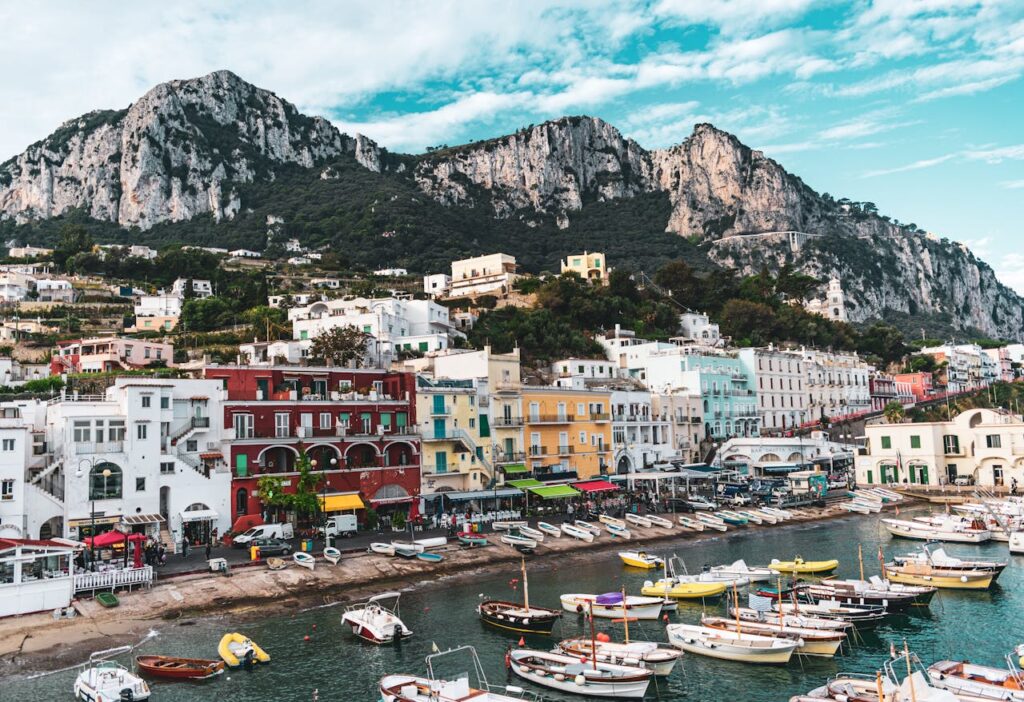
It lived up to everything. Rugged cliffs, leafy landscapes, secret coves, yacht-lined bays and a kind of laid-back sophistication that makes you want to move here and never discuss practical matters again. Ferry from Sorrento, two days — Monte Solaro’s trails by open-air chairlift (drifting over lemon groves and pastel villas, breathing in citrus and sea air), the luminous Blue Grotto, and the Gardens of Augustus.
Emilia-Romagna, Northern Italy
11 — Bologna
Historic · Food-obsessed · Effortlessly Lived-in — Pop. ~390,000
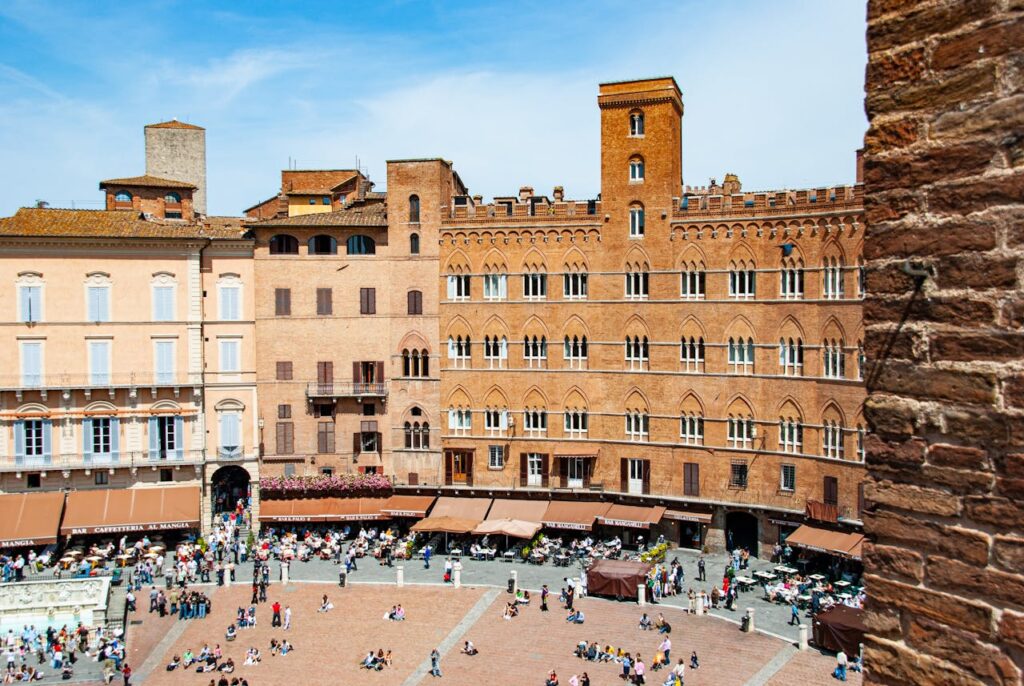
Bologna surprised me in the best way. It’s a gastronomic heavyweight — the actual birthplace of ragù, mortadella, and tortellini — wrapped in terracotta beauty, medieval towers, and a lively, youthful energy powered by one of the world’s oldest universities. It doesn’t perform for tourists the way Florence does. It just gets on with being excellent.
A food-fuelled long weekend: tagliatelle al ragù and gnocco fritto, the medieval Asinelli Tower, atmospheric backstreets under the city’s endless porticoes, and a Sunday morning wandering Ghetto Ebraico, Bologna’s old Jewish quarter, which houses some of the most interesting independent shops in the city.
Astuce : Bologna is one of the best cities to visit in Italy if you want to experience somewhere that genuinely feels Italian rather than tourist-facing.
Northern Italy — South Tyrol, Trentino & Belluno
12 — The Dolomites
Jagged · Alpine · Jaw-droppingly Dramatic — ~15,900 km²
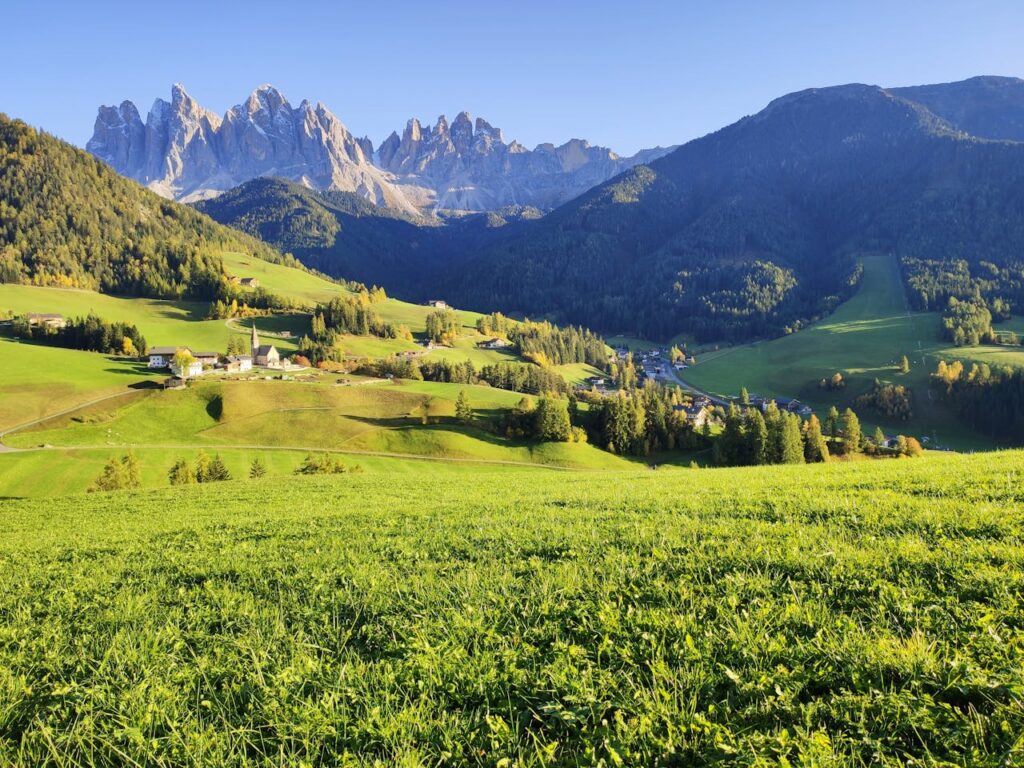
Jagged peaks. Sweeping valleys full of wildflower meadows. Quaint villages with an unexpected streak of contemporary alpine glamour. The Dolomites look straight out of a fantasy, and the reality somehow matches it. I flew into Verona, drove 2.5 hours northeast, and spent a week hiking the Tre Cime di Lavaredo loop, cycling the Sella Ronda circuit, and standing very still at Lago di Carezza watching the mirror-like lake reflect the Latemar mountains.
Tuscany, Central Italy
13 — Florence
Art-soaked · Renaissance-rich · Effortlessly Beautiful — Pop. ~380,000
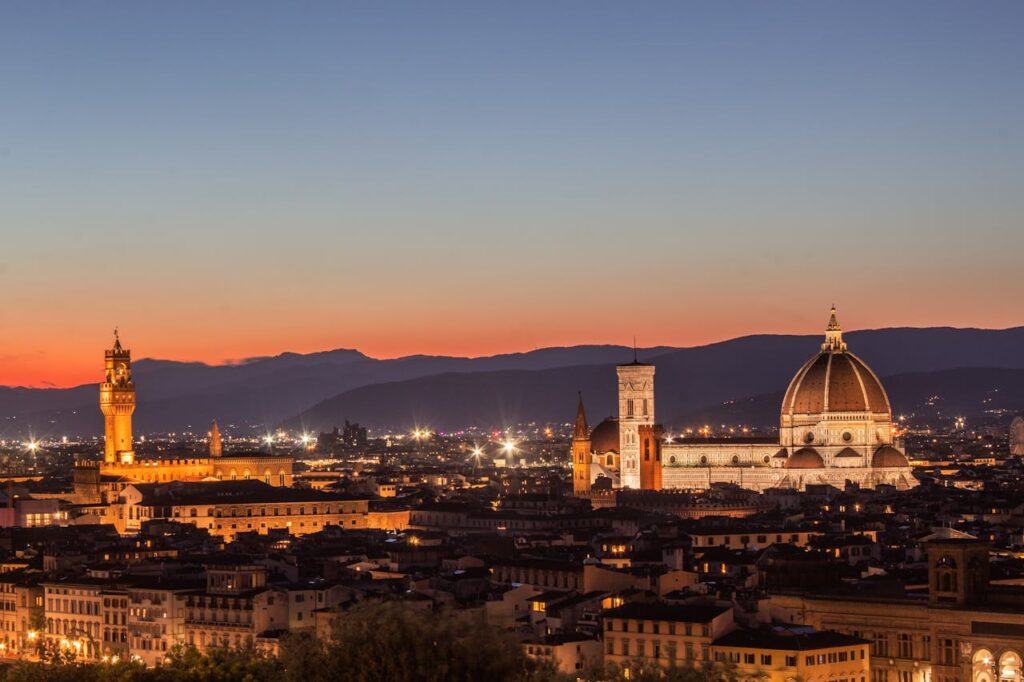
Home to Michelangelo, Leonardo da Vinci, and Dante — and it genuinely feels that way. A soul-stirring city of grand domes, elegant piazzas, and world-class art along the Arno, where every walk feels like moving through a living history lesson. Three extraordinary days: the Uffizi Gallery, Michelangelo’s David, Brunelleschi’s Dome (climb it), Pitti Palace, Boboli Gardens, and a classic Negroni in Piazza della Signoria as the evening crowd filled the square.
Yes, it gets extremely busy. Book the major museums weeks ahead in summer — the queues without a reservation are genuinely punishing.
South of Mainland Italy
14 — Sicily
Sun-baked · History-soaked · Irresistibly Dramatic — ~25,700 km²
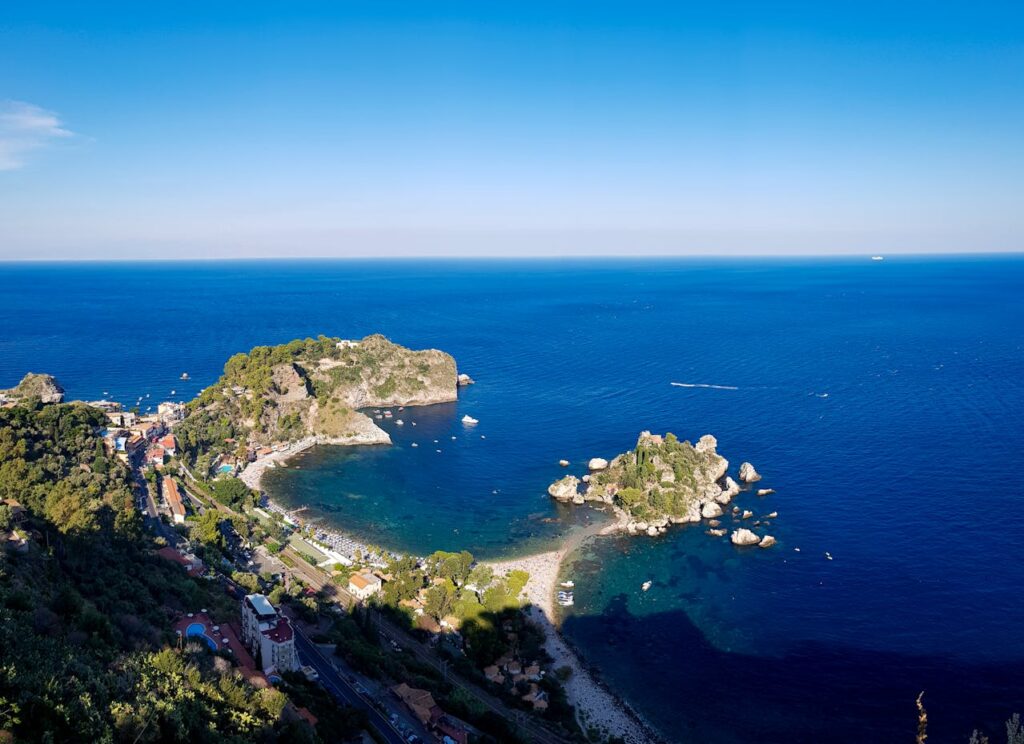
Sicily has a completely distinct identity from mainland Italy — its own traditions, its own food, its own music, its own pace. From Etna’s smoky slopes to elegant baroque cities to sun-washed beaches, it feels like a country within a country. Two weeks here: the white sands of San Vito Lo Capo, the ancient Valley of the Temples, the ruins of Selinunte, Mount Etna, and the petite fishing town of Cefalù — colorful boats in the harbour, turquoise water, sweet cannoli and golden arancini eaten by the sea.
Veneto, Northeast Italy
15 — Venice
Romantic · Labyrinthine · Hauntingly Beautiful — Pop. ~260,000
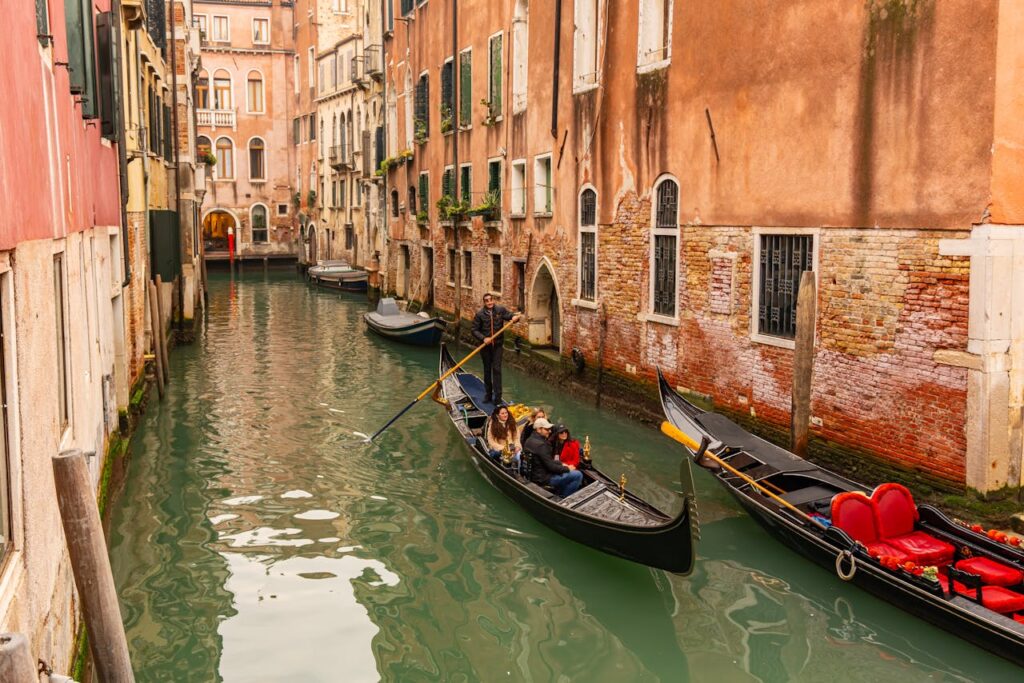
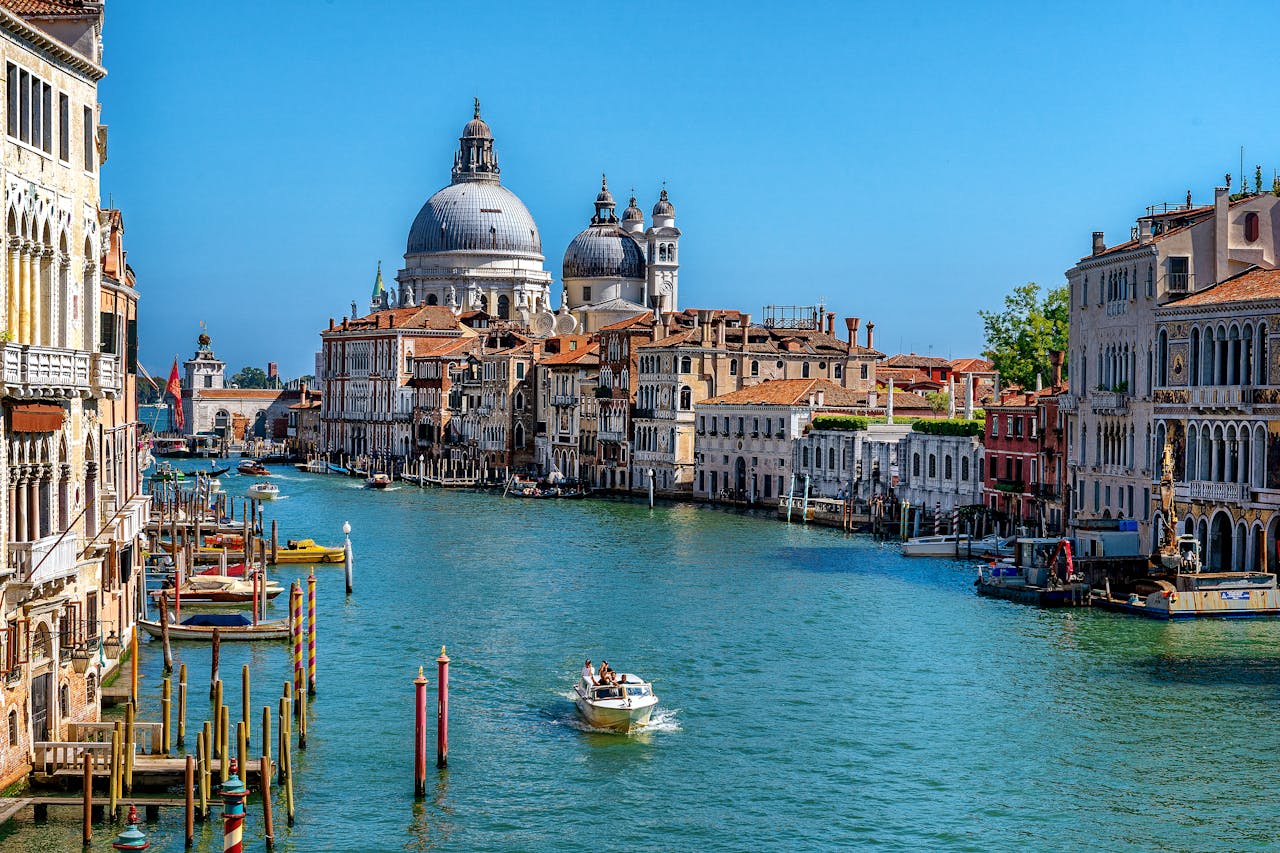
There’s a version of Venice that’s exhausting — cruise ships disgorging thousands of visitors into the same narrow calli, queues at every bridge, selfie sticks at Rialto. Visit out of season (November to February works particularly well) and it transforms completely. Suddenly the lantern-lit waterways, the elegant palazzos, the ornate bridges become actually romantic rather than theoretically romantic.
Four days: the Grand Canal by gondola, the Doge’s Palace (book ahead), walnut ciabatta at the Mercati di Rialto, and long evening walks through the San Polo and Dorsoduro sestieri where the tourists thin out and Venice reveals its quieter self.
Veneto, Northern Italy
16 — Verona
Romantic · Historic · Quietly Elegant — Pop. ~260,000
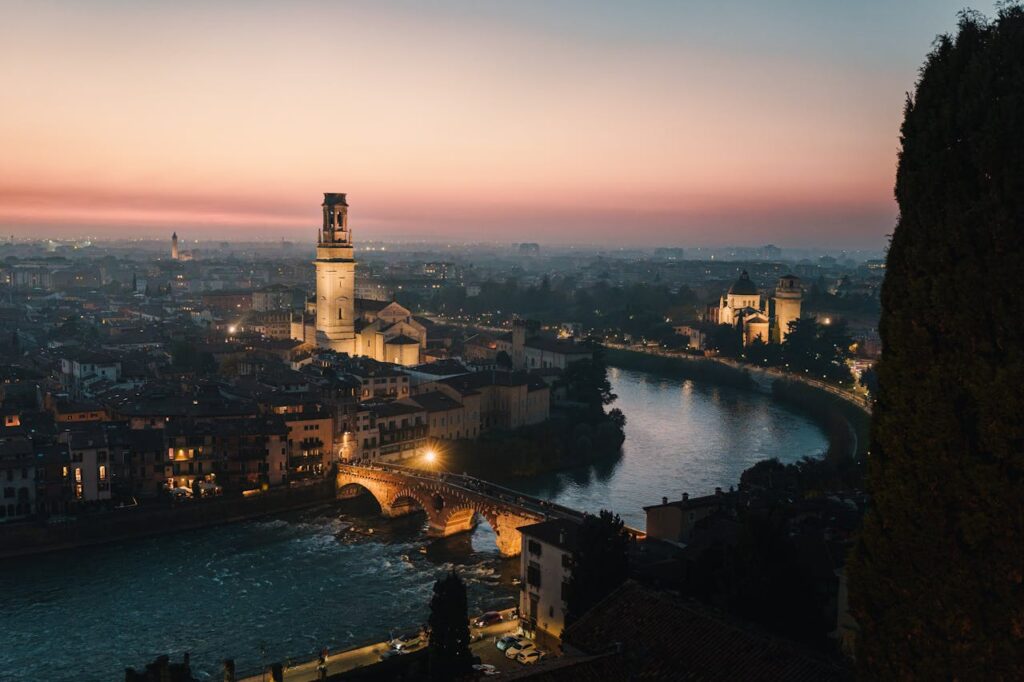
Verona won me over in the most understated way. It’s UNESCO-listed for good reason — Roman ruins, medieval streets, and Renaissance elegance all coexist in a city that feels lived-in rather than preserved. The ancient Verona Arena still hosts opera performances in summer. Juliet’s Balcony is exactly as crowded as you’d expect, but Torre dei Lamberti’s views over the rooftops completely justify the climb. Two days, candlelit trattorias, a crisp spritz under the arcades of Piazza delle Erbe.
Mediterranean Island
17 — Sardinia
Wild · Turquoise-fringed · Beautifully Untamed — ~24,100 km²
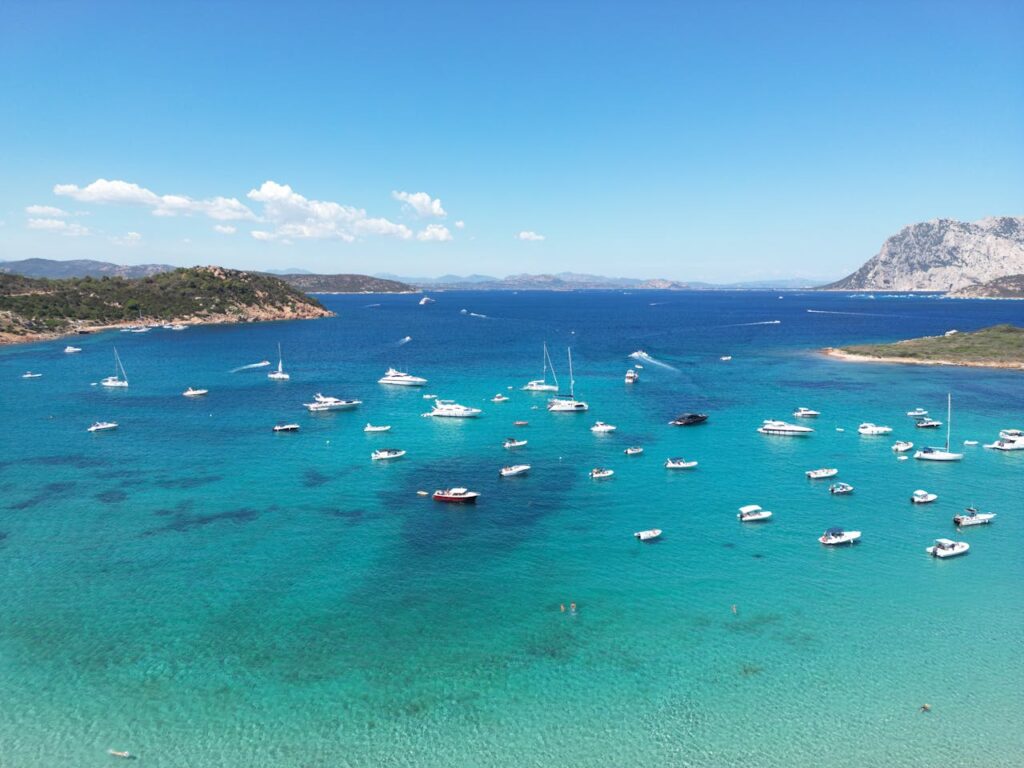
Sardinia feels different from anywhere else in Italy. Wild and remote, with Spanish-Italian architecture in its historic towns, chic marinas on the Costa Smeralda, rustic stone villages in the interior, and beaches — from long white-sand stretches to rugged cliff-backed coves — that compete with anywhere in the Mediterranean.
A week based near Olbia: Costa Smeralda glamour, La Pelosa Beach (one of the most beautiful in Italy), snorkeling the electric-blue coves of the Maddalena Archipelago, and the pretty town of Bosa with its colorful houses and family-run enotecas serving bold glasses of local Cannonau by the Temo River.
Attention : Some west coast beaches get genuinely windy — factor that in when choosing a base.
Lazio, Central Italy
18 — Rome
Ancient · Cinematic · Endlessly Captivating — Pop. ~2.8 million
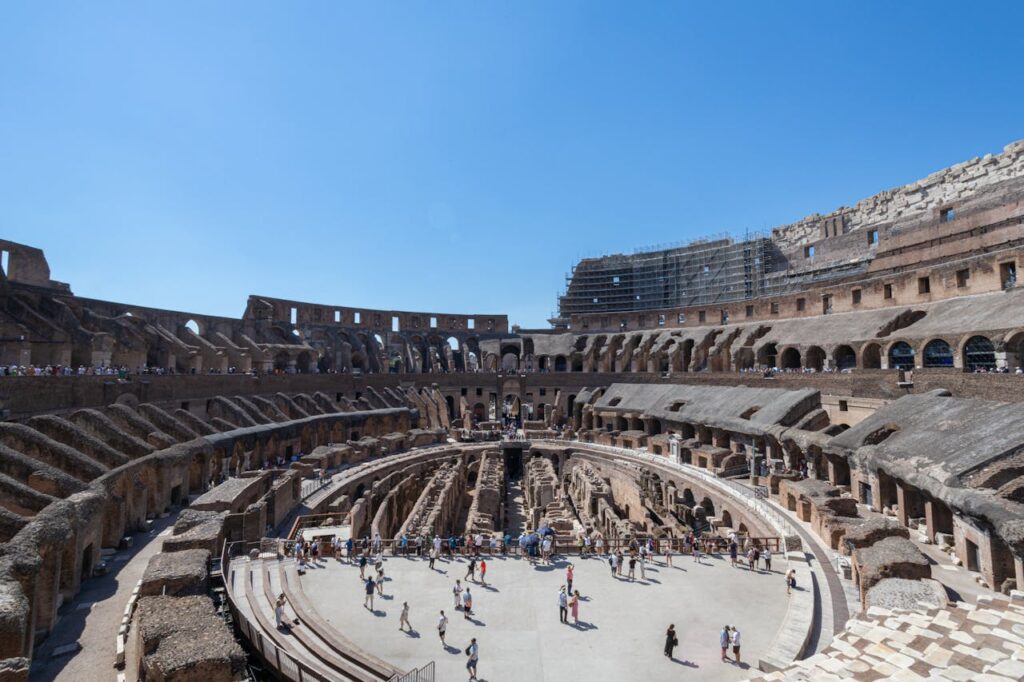
The Eternal City earns every superlative thrown at it. Chaotic at times — the traffic, the scooters, the sheer compression of history and modern life in one place — but utterly magnificent. Ruins, fountains, and architectural masterpieces around literally every corner. I’ve lived here, and I still find myself stopping on bridges over the Tiber just to stare.
Don’t try to see everything. It’s not possible. Pick your anchor sights — the Colosseum, the Vatican, the Pantheon, the Borghese Gallery — and build evenings around the neighbourhoods: pasta in Trastevere, people-watching in Piazza Navona, a walk through Prati as the day cools. Rome rewards the unhurried.
Which of These Places to Go in Italy Should You Prioritise?
That depends entirely on what kind of trip you’re after. First-timers should probably anchor in Rome and Florence, add a few days in Cinque Terre or the Amalfi Coast, and leave Puglia, Calabria, and Bologna for a return visit when they want to go deeper. Repeat visitors who think they’ve done Italy: go to Camogli, go to Sardinia in early June, go to Bologna on a Saturday morning when the covered markets are in full swing.
The honest truth about Italy is that the famous places are famous for good reasons — Rome really is that extraordinary, Venice really is that beautiful — but the less-visited ones are where Italy gives you something it can’t quite give a crowd. A table at a family trattoria where nobody speaks English. A beach you have to yourself before 9am. A hilltop village where the bar owner insists you try the local digestivo before you leave.
That’s the Italy worth planning a trip around.
Practical note: Most of these destinations connect well by train (Italy’s rail network is excellent, particularly between major cities) or by short domestic flights. Calabria, Sardinia, and the Tuscan countryside benefit from a rental car. Everywhere else, you can arrive by train and get around on foot.