
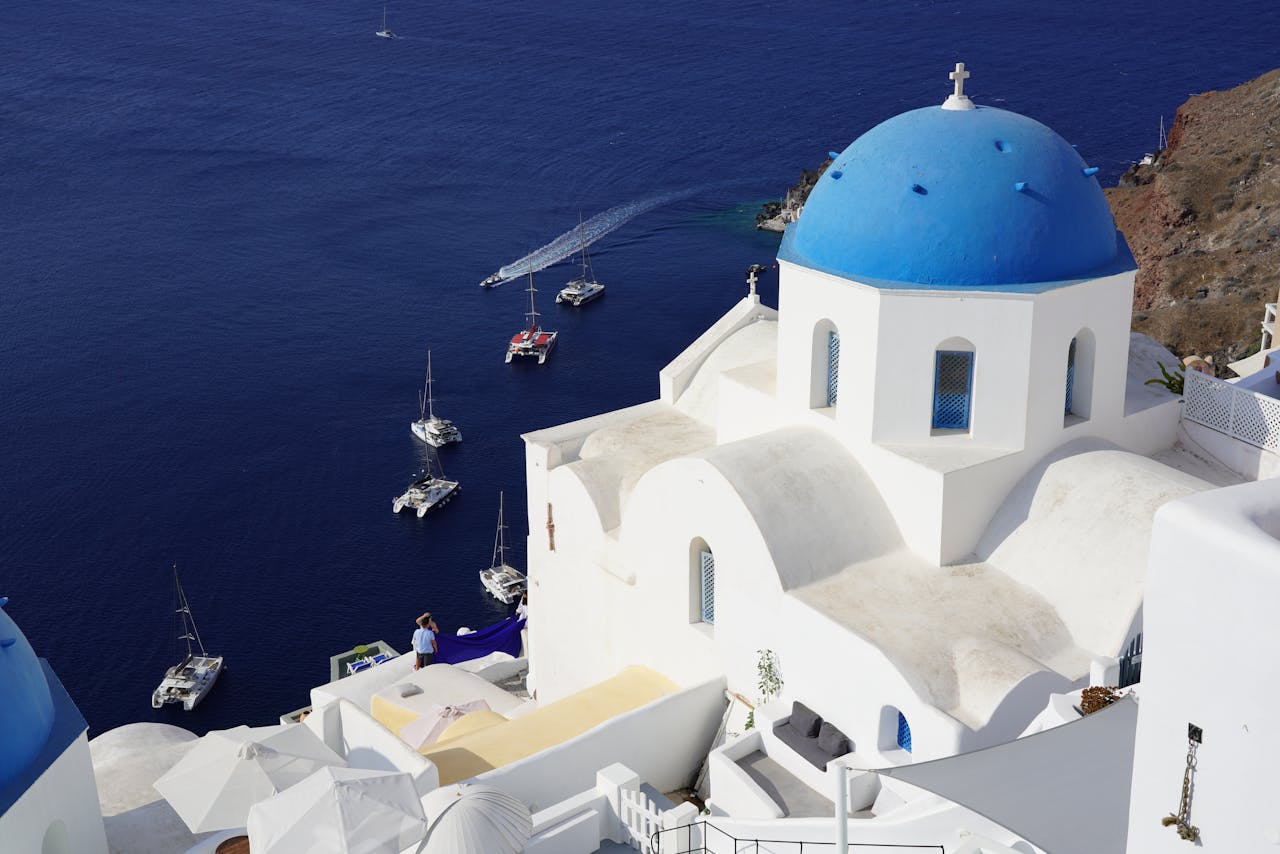
July and August aren’t what they used to be. Climate closures, new fees, and crowd caps have reshuffled the Greek travel calendar — and most guides haven’t caught up yet.
Every year, thousands of travelers book Greece based on advice that was accurate half a decade ago. They arrive in July, step off the ferry at Santorini into 40-degree heat, and find the Acropolis closed until 17:00. The itinerary they spent months planning quietly collapses before noon.
The best time to travel to Greece has shifted, and the change is structural — not temporary. Heat records, formal capacity limits, a new environmental tax, and an overhauled border entry system have fundamentally reordered what a successful Greek trip looks like in 2026. This guide works through all of it, season by season.
|
Key Takeaways
• The best time to visit Greece in 2026 is May, June, September, or October — not midsummer. |
Why July and August Are Now “Managed Risk” Months
Calling July and August peak season is technically still accurate. The hotels are full, the ferries are packed, and the islands are operating at maximum capacity. But “peak” now comes with serious operational friction that older travel guides simply don’t account for.
The Acropolis, Knossos, and Delphi enforce mandatory midday closures whenever ambient temperatures exceed 40°C. In July 2025, that threshold was crossed on 18 separate days. Projections for July 2026 put that number somewhere between 22 and 25 days. The effective sightseeing window compresses to a sprint: sites open at 08:00 and close by 13:00, potentially reopening after 17:00 if conditions allow. Running a multi-site Athens itinerary within those hours, without private transport, borders on logistically impossible.
Santorini adds another layer of complexity. A daily cap of 8,000 cruise passengers is now enforced through a ranking algorithm that scores ships on environmental impact and duration of stay. One-way pedestrian routes are active in Oia during sunset hours. For independent travelers, ferry slots and accommodations need to be locked in months out — the island’s infrastructure is at its ceiling.
Worth knowing: A 14-night stay at a 5-star Mykonos hotel in July now carries an additional €210 in Climate Crisis Resilience Fees alone — a cost that rarely appears in initial booking summaries.
The Best Time to Go to Greece: May, June, September, October
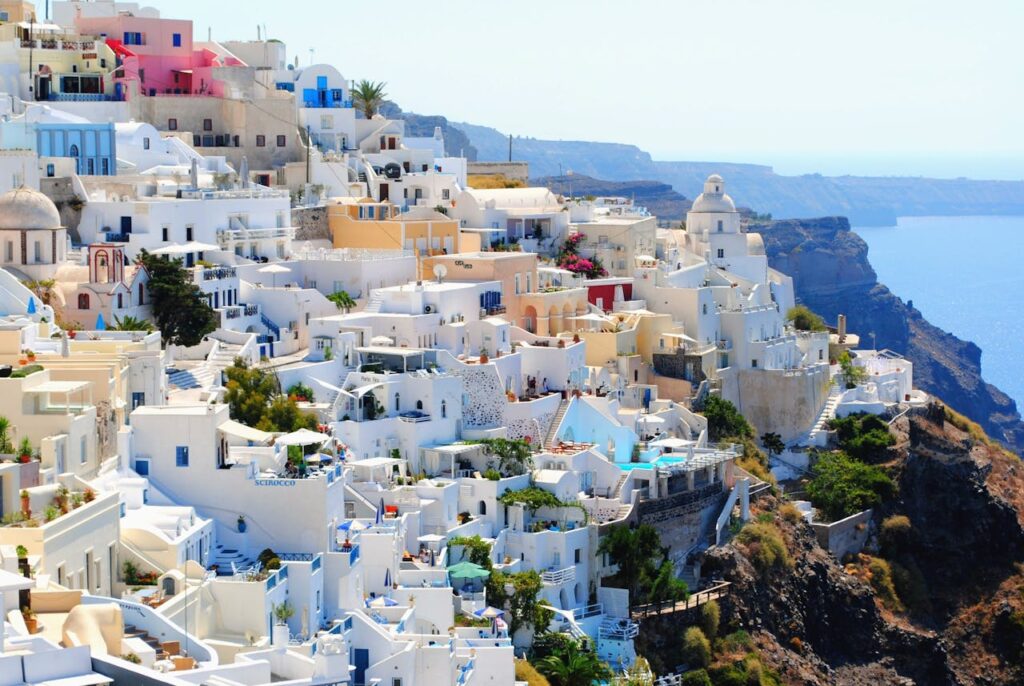
These four months have become the real peak season for Greece — not just a pleasant alternative to summer, but the period with the highest booking demand in the country’s recent tourism history. Industry data from 2026 shows that 28% of international travelers have actively moved their trips away from midsummer to avoid the heat and crowd problems.
The operational advantages are concrete. The Acropolis runs at full capacity with no midday closures. The 20,000 daily visitor cap remains, but the time-slot system functions without the bottlenecks that extreme heat creates. Temperatures across these four months range from 20°C to 28°C — warm enough for beaches, cool enough to walk archaeological sites without heat exhaustion.
May and June
Daytime temperatures sit between 22°C and 28°C. The Aegean is calm. Ferry schedules run at full frequency, including the new Attica Group high-speed catamarans on Saronic Gulf routes. The islands are fully open for the season but haven’t yet reached their peak density.
The trade-off is booking pressure. Acropolis time slots for 08:00–10:00 entry sell out within hours of release on the Hellenic Heritage portal, which opens 60 days in advance. The same applies to Knossos and Delphi. Anyone planning a May or June trip needs their ticket strategy sorted well before departure — on-site ticket sales no longer exist for these months.
September and October
September offers essentially everything May and June do, with the added benefit of slightly thinner crowds in the first half of the month. The sea holds at 22°C–24°C through mid-October — genuinely swimmable, not just technically warmer than cold. October brings occasional rain showers that don’t disrupt outdoor visits, and northern Greece regions like Zagorochoria see a surge in interest from travelers chasing moderate mountain temperatures of 18°C–24°C.
These are also the months where the “coolcation” trend has taken hold. The Cycladic islands get scorched in July; the Pindus mountain villages stay comfortable through summer. Zagorochoria, a network of 46 stone villages, offers hiking, traditional guesthouses, and accommodation rates running 40–50% below Cyclades equivalents.
The New Fees: What Greece Actually Costs in 2026
Pre-2025 budget estimates are largely wrong now. Two changes matter most.
The old “Athens Combined Ticket” covering seven archaeological sites for €30 was discontinued in April 2025. Each site now sells its own ticket: Ancient Agora (€10), Temple of Olympian Zeus (€8), Hadrian’s Library (€6), Roman Agora (€8). The Acropolis and its slopes remain €30 as a unit. A full day of Athenian archaeology now runs €62 — more than double the previous all-in cost.
The Climate Crisis Resilience Fee replaced the old stayover tax and operates on a sliding scale by property rating:
| Accommodation Tier | High Season (Apr 1–Oct 31) | Off-Season (Nov 1–Mar 31) |
|---|---|---|
| 1–2 Star / Apartments | €2.00/night | €0.50/night |
| 3-Star Hotels | €5.00/night | €1.50/night |
| 4-Star Hotels | €10.00/night | €3.00/night |
| 5-Star / Luxury Villas | €15.00/night | €4.00/night |
| Short-Term Rentals | €8.00–€15.00/night | €2.00–€4.00/night |
Cruise passengers face separate disembarkation fees: €20 per person at Santorini and Mykonos during peak season (June–September), dropping to €12 in shoulder months. A family of four hitting both islands plus Heraklion in midsummer adds roughly €180 in port fees to the final onboard bill.
The Off-Season Case: November to March
The winter window is the most misunderstood season in Greece. It’s genuinely good — just good at different things.
Accommodation costs drop 40–60%. Mid-range Athens hotels that run €120–€150 per night in May fall to €60–€80 in winter. Luxury properties on Crete and the Peloponnese cut rates by half. Acropolis time slots are walkable — no advance booking required, and the 20,000 daily visitor cap is never reached. The site is fully accessible throughout the day, without the midday shutdown that limits summer visits.
The honest limitations: ferry frequency to smaller islands like Naxos, Paros, and Sifnos drops roughly 60%, running two to three days per week. Some Santorini and Mykonos businesses close entirely from November through March. Athens mainland temperatures sit around 10°C–15°C, with November and December bringing regular rain. The sea is too cold for swimming.
One thing to correct: Guides claiming a 50% winter discount on Acropolis entry are out of date. The €30 adult entry fee has applied year-round since April 2025. The historical winter discount no longer exists.
April and Late October: The Strategic Middle Ground
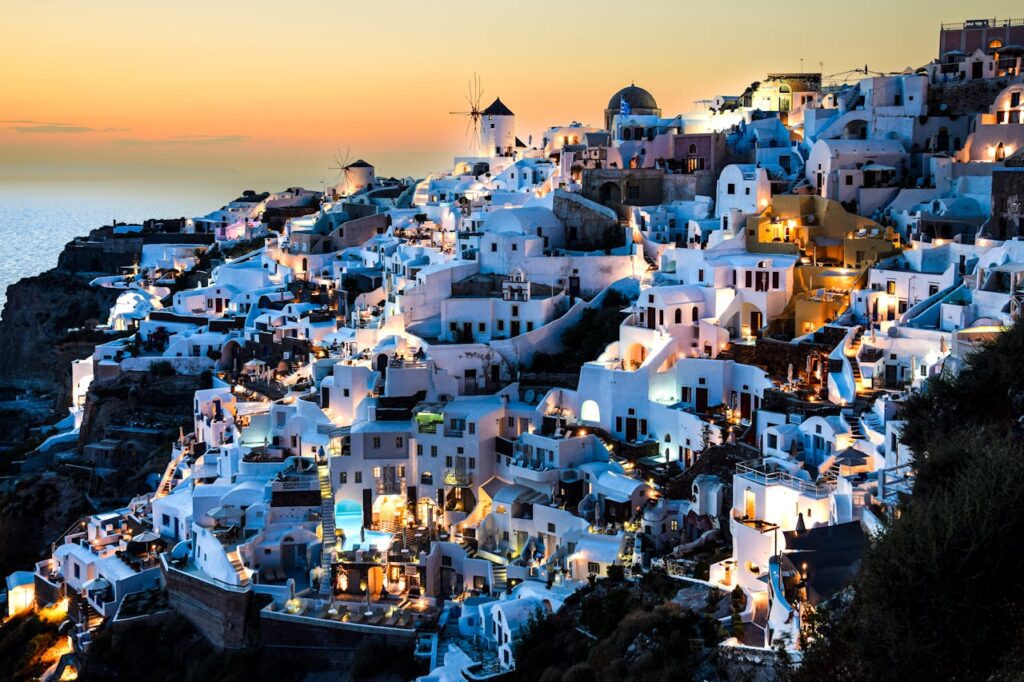
April functions as the practical sweet spot for travelers who want to avoid both the summer booking frenzy and the winter service reductions. Temperatures run 16°C–22°C, sites are fully operational, and ferry bookings are available with just 7–14 days of notice rather than the 45–60 days required for peak months.
The catch: the Climate Crisis Resilience Fee switches to its high-season rate on April 1, even though accommodation prices haven’t yet peaked. Mid-range hotels in Athens and Crete typically run 20–30% below their May–June rates in April — fee plus lower nightly base still works out favorably.
Late October mirrors April on the other end: accommodation prices begin to ease before the ferry schedule cuts in November, and the weather remains usable. The sea stays warm enough to swim through mid-October.
What’s New for 2026: Sites, Entry Rules, and Getting There
New Cultural Sites
April 2026 saw the reopening of Zeus Cave (Diktaion Andron) on the Lassithi Plateau after a €16 million renovation. The cave now has an accessibility elevator and stabilized rock walls. May 2026 brings the reopening of the Old Acropolis Museum after nearly two decades of closure — now a multi-functional archaeology center with a public conservation lab where visitors can watch experts work on over 1,000 previously unseen artifacts. Entry is covered by the standard Acropolis ticket, but timed access is mandatory.
The EES Border System
Europe’s Entry/Exit System became fully operational at all Schengen border points on April 10, 2026. For American travelers, this means the first entry into Greece now requires biometric enrollment: a live facial scan and four fingerprints. Passport stamping is gone, replaced by a digital record.
Real-world reports from Athens International Airport describe delays of up to three hours at border checks during busy transit windows — despite the European Commission’s claim that registration takes under 90 seconds on average. Budget significant buffer time at your initial Schengen entry point.
ETIAS: Coming Q4 2026
Travelers visiting Greece in spring or summer 2026 don’t need ETIAS approval yet. Those departing in November or December 2026 should watch for when mandatory operations begin. The fee is €20 for travelers aged 18–70, applied completely online, and valid for three years or until passport expiry. Processing usually takes minutes, but secondary screening can extend this to 30 days.
Flights from the US
2026 represents the most connected transatlantic season Greece has ever had. American Airlines launches a new daily seasonal route from Dallas–Fort Worth to Athens beginning May 21, using a Boeing 787-8. Charlotte (CLT) gets a new American Airlines route from June 6. Existing daily seasonal service continues from JFK, Newark, Chicago, Atlanta, Boston, Philadelphia, and Washington.
One thing that hasn’t changed: there are no direct commercial flights from any US hub to Santorini, Mykonos, or Crete. All American travelers connect through Athens. Plan for a minimum two-hour layover to clear immigration, collect checked baggage, and re-check for the domestic leg.
Getting Around Athens
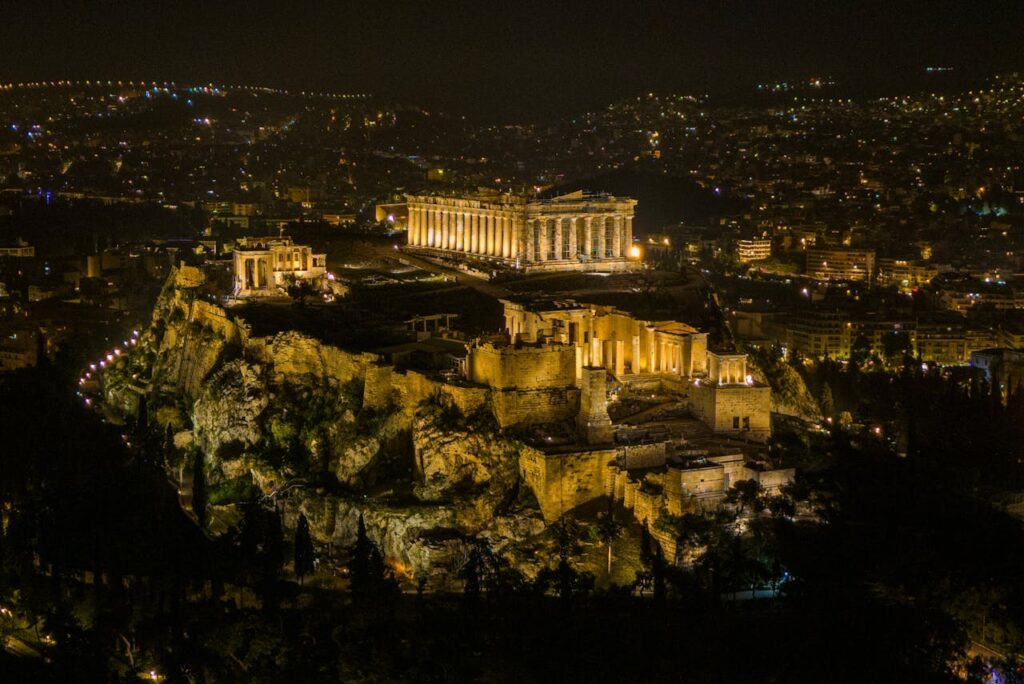
Athens public transport is now fully contactless. The Tap2Ride system accepts Visa and Mastercard — physical or digital via Apple Pay and Google Pay — at every metro gate and bus validator. The system auto-applies the cheapest fare based on travel history, with a daily cap of €4.10 for urban travel. Airport transfers cost €9.00 by metro or €5.50 by the X95/X96 express buses. No ticket kiosk required.
Daily Budget Reference by Traveler Type
| Traveler Profile | Daily Budget (Per Person) | What It Covers |
|---|---|---|
| Budget | €50–€85 | Hostels, street food, free beaches, urban transit |
| Mid-Range | €110–€200 | 3-star hotels, taverna meals, ferries, site entry |
| Luxury | €280–€500+ | 5-star hotels, fine dining, private drivers, tours |
| Santorini / Mykonos (mid-range) | €350–€412 | Caldera-view accommodation + standard activities |
Greece is still substantially cheaper than Spain or Italy — typically 30–50% lower for equivalent experiences. The Cycladic islands are the exception. Santorini and Mykonos operate at their own pricing tier, and that gap has widened in 2026.
The Best Time to Visit Greece: A Season-by-Season Summary
May and June give the most reliable combination of good weather, full site access, and a functioning ferry network — at the cost of needing to plan 90–120 days in advance. September and October offer the same operational advantages with slightly lower booking pressure, especially later in October. April is underrated: weather is mild, hotel prices haven’t peaked, and booking lead times are manageable. November through March suits travelers who prioritize mainland history and deep cost savings over island-hopping and beaches. July and August remain viable for travelers with high heat tolerance, early rising habits, and acceptance of compressed sightseeing hours — but spontaneous planning won’t work.



One Comment